By Rabbi Abraham Unger, Ph.D.
Executive Director
This Week’s Torah Portion
Leadership on the Merits
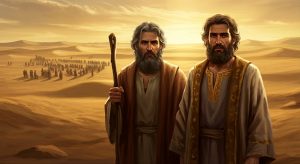
All of us face different challenges. Some are born with challenges, while others encounter them anew over the course of life, but we each face stumbling blocks along the way. The greatest figure in all of Jewish history, Moses, was no different. He too had to face what may be the greatest challenge a leader has to face: the inability to speak clearly in public. After all, Moses had a speech impediment. The Torah itself records it.
When Moses raises this disability with G-d after having been charged with historic leadership, G-d reassures Moses that his older brother Aaron will serve as his mouthpiece. G-d is willing to make an accommodation, but not to absolve Moses of his own responsibility to follow through on his talent for leadership. Moses will ultimately liberate a nation from slavery.
The Torah is teaching here that even the most seemingly serious of hindrances at first glance is no excuse to step away from one’s role. There is always a way, and our primary obligation is to fulfill the purpose for which each of us are born. G-d will be our partner in helping us to overcome any challenge, so long as we are ready to stand up and do our part.
Weekly Parenting Message from the Parsha
Hope and Promise
Have you ever gone through an experience difficult enough to wonder if it is even worthwhile just to hope, when being an optimist simply seems unrealistic? Imagine a group enslaved, with endless toil ahead, asked to believe that freedom lies just around the corner. Would you expect these slaves to jump up at the mention of redemption by a former royal prince who claims he has come back to save them through the will of G-d? Even in an epoch of deep faith in the supernatural, this is a big ask, yet exactly the one the Children of Israel are asked by Moses to make in this week’s Shabbat Torah portion.
Sure enough, the Torah records that the Jews responded to Moses’ rhetoric with “kotzer ruach,” shortness of breath, due to their anguish and sheer workload. The Italian Rabbinic commentator known as Sforno comments that the Israelites couldn’t comprehend the hopefulness of Moses’ message; it was beyond them to see a bright future in their current state of servitude.
The wonder of children is just the opposite. They live without inhibition, in a constant state of wonder and optimism. They have no understanding of the realism in which we adults often take such pride. I think it is one of our most vital assignments as parents to keep that awe in our children alive for as long as possible. It is not foolhardy. It is a resource for resilience. The more we can encourage their hopefulness, the more they will be able to plow through challenges without losing the ability to see beyond the moment.
The message of Exodus is a narrative of hope. There are wondrous miracles and fabulous occurrences, all to reenforce faith in a future that could reasonably be seen as bleak, but in fact, held forth magnificent promise.
Once we bring forth children into the world, we must never ever let them let go of the promise each of them holds so close in their earliest years. If we can do that, we have given them a gift for a lifetime.