By Rabbi Abraham Unger, Ph.D.
Executive Director
This Week’s Torah Portion
The Wonder of Grandchildren
Much of the literature on raising children focuses on parenting, yet the role of grandparents is little discussed. However, in each of our families, we understand the significance of grandmothers and grandfathers. They are not only the repositories of history and rootedness; they can be the beloved alternate set of parents that complements the parents’ work, providing refuge to parents and children alike in offering the warm embrace of familial continuity.
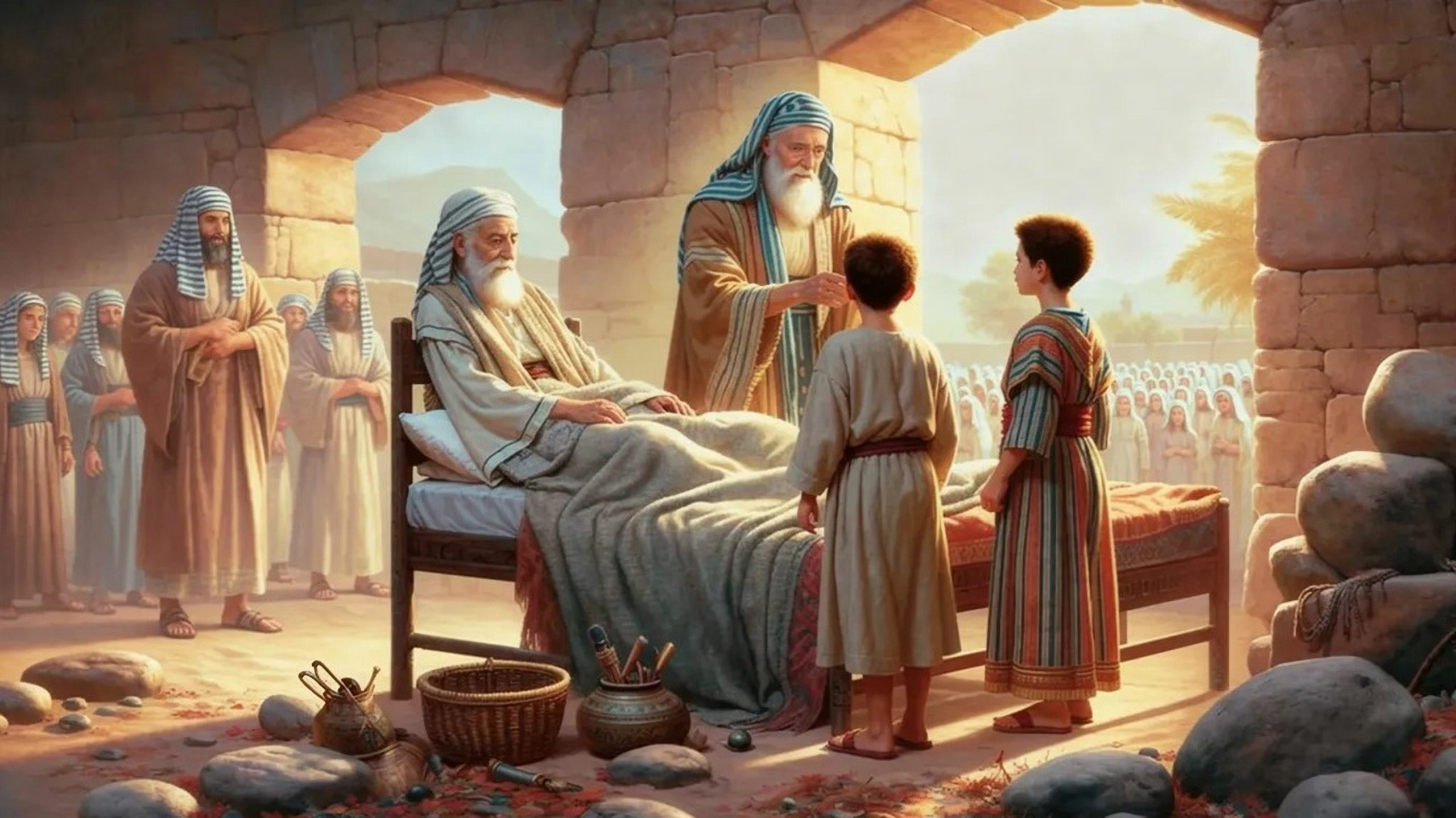
The Torah in its wisdom recognizes this central role of grandparents in the upbringing of children. This week’s parsha opens with Jacob blessing his grandsons Ephraim and Manasseh. These were Joseph’s sons, the first Jewish children born in the Diaspora, outside the land of Israel and far from centers of Jewish life, but their grandfather Jacob claimed them as his own, and was their role model. Indeed, right before he passes, Jacob blesses them and states in no uncertain terms that these two Egyptian grandsons of his are “considered to be mine.” Rashi comments that Jacob was indicating that Manasseh and Ephraim too will get portions of the land of Israel, just as Joseph’s brothers will. I can only imagine how these two boys felt when getting their final blessing from their grandfather.
We live in tumultuous times. The world is changing faster than anyone is able to predict. It is not only technology. Social structures and institutions are transforming. Our children need a sense of security more than ever, and grandparents fulfill that precise role. Jacob’s blessing to his grandsons is a much needed chapter in the way we think about parenting and family.
Weekly Parenting Message from the Parsha
The Power of Critical Thinking
We all want our children to be independent of mind and heart. They should form their own perspectives on what matters to them and develop an emotional intelligence that matches their intellectual capabilities. These fundamental parental aspirations for our children are intrinsic to how we think about the values we try to transmit.
This week’s Shabbat Torah portion speaks to this hope. As the patriarch Jacob, about to pass, calls over his grandsons for a blessing, he tells their father, his long lost son Joseph with whom he was recently reunited, that he “dared not hope to see his [Joseph’s] face again.” Rashi explains the verb used to capture this feeling suggests “thoughts,” such as giving advice or forming an opinion. Jacob treasured the chance to engage in spirited conversation once again with his son. To him, seeing someone meant being in dialogue with them, and thinking through an idea or sensibility.
This Biblical paradigm of human interaction is exactly what makes for a truly critical thinker – someone unafraid to explore any facet of the human condition with another. It is our task to model this kind of openness for our children, and showing that we can hold fast to our convictions while remaining civil, soulful, and curious as we speak and listen. This is the Jewish way, and indeed, a value sorely needed these days. It all begins at home.