By Rabbi Abraham Unger, Ph.D.
Executive Director
This Week’s Torah Portion
Humanity and Difference
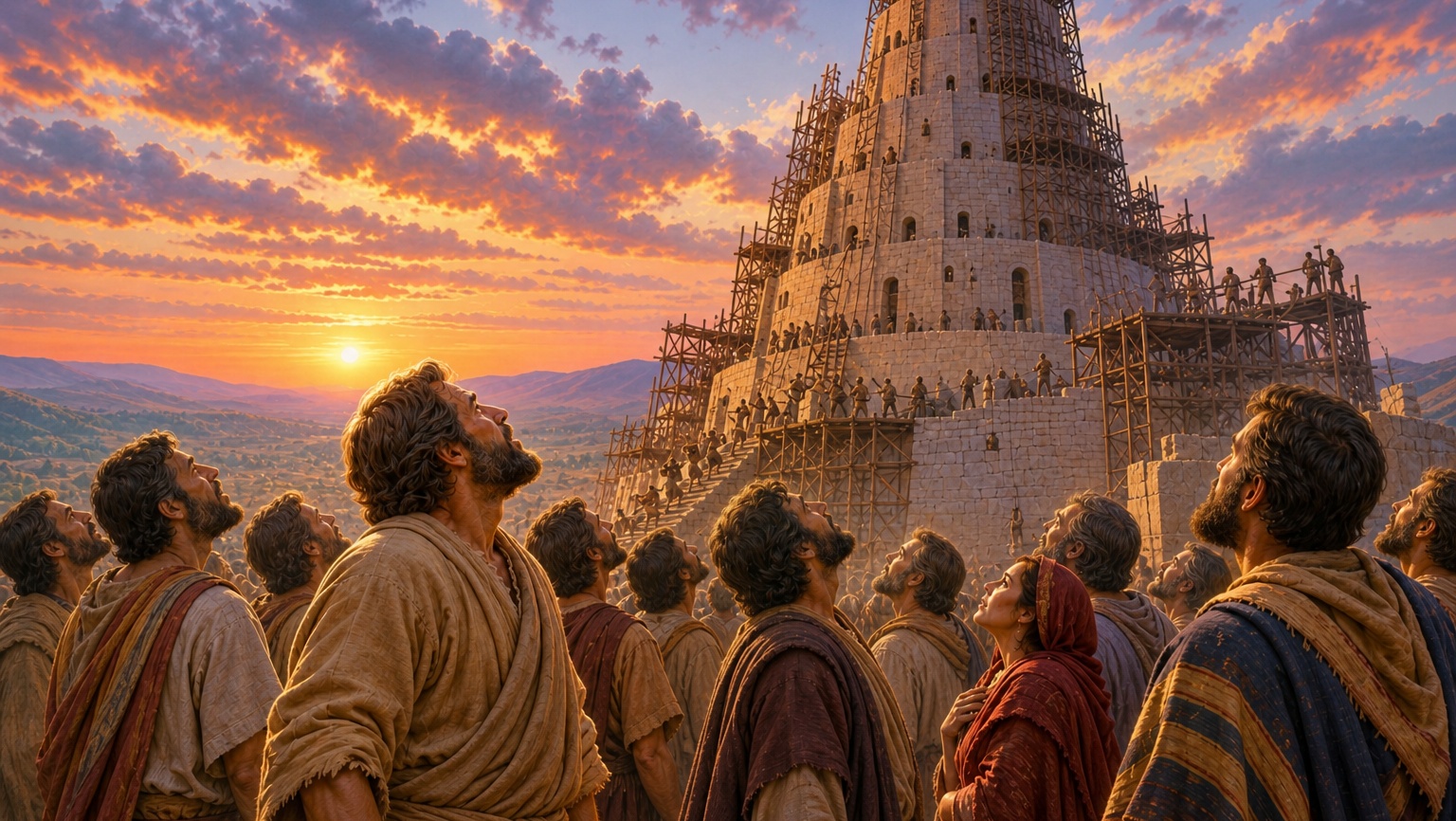
The last section of this week’s Torah portion contains an enigmatic narrative. It is a story that has puzzled readers throughout the ages. After the great flood, Noah’s descendants were united; humanity shared both a single language and a single goal: to build a tower to the heavens. The Talmud suggests that mankind wanted to pierce the heavens so that its “waters will flow.” Perhaps it was an attempt to control nature after the trauma of the flood.
G-d is taken aback by this human hubris. He disrupts early man’s linguistic unity by infusing multiple languages into civilization and then scatters humanity. G-d names the city of this abandoned tower project “Bavel”, indicating confusion. What is the Torah trying to teach us?
When the world grows monolithic, believing progress stems from a lack of differing perspectives and purposes, something in the human condition is amiss. We are each supposed to see things differently. Our way of looking at the challenges we face should spark debate, not unquestioning collectivism. Rabbi Dr. Jonathan Sacks wrote that “the story of Bavel is a critique of the power of the collective when it crushes individuality.”
Humanity is made all the richer by its differences. Imagine how dull the world would be if everything was exactly the same. Think of the grayness of the images of housing blocks in Communist Eastern Europe a generation ago. Imagine that image as a metaphor for a life lived within the misguided dream of the Tower of Bavel.
We are not put on this earth as automatons. The wonder of being human is the tapestry of a world filled with different languages and cultural traditions and spiritual yearnings. Collapsing all of those experiential dimensions into one vertical tower denies the fullness of the human prospect. Our creativity should not be bounded, even by the heavens.
Weekly Parenting Message from the Parsha
Even Moms and Dads are Human
In this week’s Shabbat Torah reading, we encounter a facet of G-d that is surprising but comforting to us as parents. Recall that G-d is likened to a father in Jewish theology. At the start of the parsha, the verse states that G-d “regretted” creating humankind. We had not exactly lived up to our potential as a species regarding ethics, so He sent a flood to wipe everyone out except for one man and his family. Noah was deemed “righteous in his generations.” That’s not the most flattering comment, but it warranted Noah staying alive. Then, after the flood, G-d promises never to destroy as much of Creation as He just has. He exclaims that “so long as the earth exists, seedtime and harvest, cold and heat, summer and winter, and day and night shall not cease.”
The commentaries dispute whether G-d really experienced regret. After all, G-d is beyond our human understanding, and the Bible is transmitted in the language of man so that its history and lessons can be understood. But, let’s take these verses from the Torah at face value. They describe a G-d who sometimes gets frustrated, and searches for ways to raise His children with a balance of fear and love. He is dealing here with humanity in its toddler phase, so to speak. In this case, He recognizes He might have been too harsh. Soon He offers humanity a rainbow of wondrous colors as a sign of His covenantal promise never to destroy the world again.
We have much to learn here. As parents we are imperfect. Sometimes we are too lax, and sometimes we can be too strict. Sometimes we let our frustrations show, and sometimes we have regrets. If G-d can express all of this, we can too. Just as G-d made sure to record these moments in the Torah for all to read, we also can openly discuss with our children that we are human, and sometimes miss the mark. It’s okay. We are not showing weakness. We show love by sustaining an open conversation with ourselves and with our children, and by modeling our humanity in an unceasing effort to be the best parents we can be.