By Rabbi Abraham Unger, Ph.D.
Executive Director
This Week’s Torah Portion
From the Four Corners of the Earth
This Shabbat we begin at the beginning in Sefer Beresheet, Genesis, with the formation of the world and its inhabitants, leading up to the pinnacle of creation: humankind. As we start the annual cycle of Torah readings again this Sabbath, we ask, “What is the essence of this creature called man? From whence has he sprung, and where does he belong in the scheme of things?” To this, the Torah answers: he has a home both in the place from whence he comes, and across the world. He is both a creature of the particular and the universal. Although Adam was not a Jew himself, this defines the Jew.
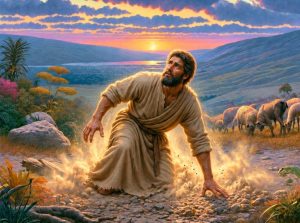
Rashi explains this duality of man’s existence more fully. In Genesis 2:7, the verse describing Adam having been created from the dust, Rashi comments that when the Torah references “the dust of the ground”, it means that Adam was formed “from the four directions.” Rabbi Marc Angel writes that this implies “One must recognize an innate kinship with all humanity in the four corners of the earth, and also recognize one’s particular rootedness in a family/tradition/society…We should fully develop our uniqueness, while at the same time fostering our universality.” Sound familiar?
To be a Jew means to live out that model of being human. We are grounded in our Mesorah/tradition, yet we try our best to play a meaningful role in the unfolding universal human story. We are driven to make a contribution – that is the reason Rabbi Dr. Joseph Soloveitchik articulated that Adam’s purpose was to engage the world and help develop it. Subscribing to Modern Orthodoxy means an unwavering commitment to Jewish law and its intrinsic values, while using these foundational structures as wellsprings of creativity for the world in which we live.
Weekly Parenting Message from the Parsha
It Takes Imagination
The second Hebrew word of the Torah has a unique meaning. It is “barah”, created, found in the Bible’s very first verse: “In the beginning G-d created.” This particular Hebrew verb is linguistically unique. It indicates creation of something from nothing. Because humans create items from pre-existing matter, even down to molecules and atoms, this particular verb of “barah” can only be ascribed to G-d. Can you imagine this possibility? It is almost too unfathomable to contemplate. Perhaps that’s the point.
We are implicitly being asked by the Torah to imagine – to think and dream big. Imagine nothingness and the emergence of a majestic universe full of grandeur. Imagine the creative force undergirding it, and each of our roles within it. This is what the creation narrative of Genesis in this week’s Torah portion is telling us to consider. It takes imagination to think big. It means we have to get past mundane things and recall our own human potential.
This is exactly the ethos we are intended to transmit to our children. Support their wild and broad imaginations. The Torah wants us all to retain the awe and wonder that began at the moment of creation. Life is not just loftier with imagination. It has yet more depth as we guide our children in making meaning of their lives as we all grow, parents and children together.