By Rabbi Abraham Unger, Ph.D.
Executive Director
This Week’s Torah Portion
To Listen and Learn
In this week’s parsha we spend time getting to know the essence of a central yet oft neglected figure in the earliest days of Jewish history. Betzalel, the artisan who was tasked with building the Mishkan, the traveling Tabernacle in the desert, is described as a human being who provides a model of ideal behavior. Not all of us may be destined to become like Moses, but we can become like Betzalel, who dedicated his life to service.
The Torah reports Betzalel was “endowed…with a Divine spirit.” Wisdom and knowledge were part and parcel of that spirit. Rashi comments that Betzalel was open to learning from others, while also able to deduce his own original conclusions from what he learned.
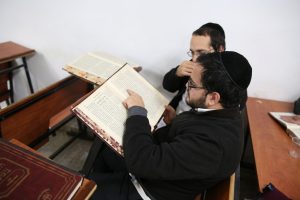
This is what we call “critical thinking” in education. Listen to others, consider their ideas, and then develop an original perspective to contribute to the conversation. That, after all, is the goal of Talmud Torah, study of our sacred texts. It is why in yeshiva students study in pairs. They learn from the dialogue inspired by a classic text.
Imagine a world of civil discourse, where all are welcome to their points of view, and where each position takes reasonable account of the other. This was the humble nature of Betzalel the artisan. He was the Israelite selected to build the first holy structure in Jewish history. His character is a model of conduct sorely needed in our world at this moment.
Weekly Parenting Message from the Parsha
Parenting Means Presence
This week’s Shabbat Torah reading contains the famous story of the golden calf. The Children of Israel, recently liberated from slavery, become nervous when Moses goes up to Mt. Sinai to receive the Torah and doesn’t come down as readily as they expected. In lieu of their leader’s presence, they build an idol through which to feel more secure in Moses’ absence.
Moses had become a paternal figure to the Jewish people. He essentially raised them from a lost group of enslaved tribes to develop into a cohesive nation. While the ancient Jews were called the Children of Israel to represent them being children of G-d, they were as much the sons and daughters of Moses. By way of modern historical analogy, many orphans from the concentration camps of World War Two were taken in by Chassidic Rabbis after the Holocaust and raised as their own children. This is how the East European Chassidic community replenished itself.
Imagine the Israelites’ dismay when Moses was away on the mountain top. Imagine how worried and insecure they felt. Indeed, it was a feeling of being orphaned. That does not excuse a poor choice of conduct such as slipping back into the idol worship of the pagan world from which they had come, but it does explain the Children of Israel’s behavior.
Now imagine a child whose parent seems far away and less than fully present. A feeling of insecurity creeps in. It becomes easier to veer into a direction that may not be for the best.
My father told me the day my sons were born that children don’t ask to be born. If we bring them into the world, we are obligated to them. That means being fully present for them, both physically and emotionally.
It takes time, and patience, and consistency, but there is no more meaningful vocation in the world than parenting. That is my takeaway from this week’s parsha. I think of it frequently as a father. All that our tradition asks of us as parents is to be with the children we are blessed with raising.