By Rabbi Abraham Unger, Ph.D.
Executive Director
This Week’s Torah Portion
The Power of Compromise
It is hard to listen. It is even harder to really internalize the other side’s argument to reach a middle ground. In this week’s parsha, we see not only the virtue of open discussion but also the power of compromise.
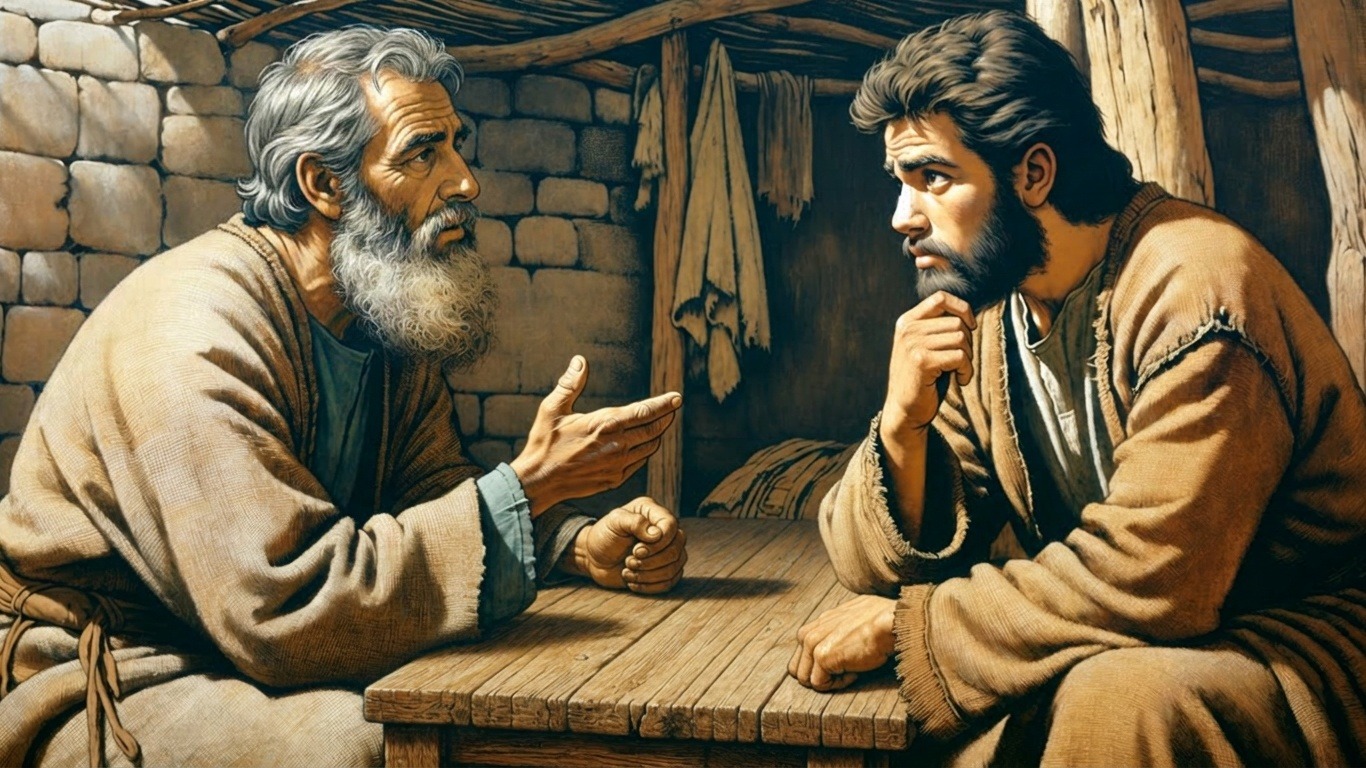
Moses’ cousin Korach claims that Moses and Aaron have usurped power. He claims all Israelites should be vested with governance authority, not just Moses as the civil national leader and Aaron as the ceremonial High Priest. Korach’s underlying motivation is a priestly role for himself. After all, he was a cousin to Moses and Aaron, but his language uses what seems to be reasonable political rhetoric asking for greater democracy. The claim itself, regardless of its real purpose, has weight. Moses seeks to respond.
Moses then reaches out to Datan and Aviram, allied with Korach and very much in the mix. He seeks some back-channel communication to resolve the matter. Moses asks to meet, and they respond bluntly, “We will not go up.” That’s Biblical language for refusing to sit down at the negotiating table. In the end, Moses and Aaron sustain their positions and Korach and his band are swallowed up by the terrain upon which they stand. They descend into the earth below for not ascending to the level of listening and working things out.
In Halakhah, Jewish law, pesharah/compromise, is preferred to the strict letter of the law when a civil matter reaches Bet Din/Court. The panel of judges is supposed to ask the litigants to arbitrate rather than rely on the court’s ruling, even though the ruling of a Rabbinic court is itself called a Din Torah/Judgment of the Torah.
That’s how significant resolution through negotiation is in Jewish tradition. It is a Biblical mandate! Imagine the powerful change we can make in the world if we apply this value to our lives. It all begins with listening.
Weekly Parenting Message from the Parsha
The Power of Extended Family
Families are often divided. This is not just a matter of sibling rivalry within the immediate family. Within the larger family structure there is often distance, causing cousins to grow up without each other.
When my own children were little, a wonderful educator who led their preschool told me to stay in touch with—and even grow closer to—my extended family. She advised that these relationships offer young children a sense of connectedness and foundational support as they carve out their own places in the world.
In this week’s Shabbat Torah reading, each Israelite tribe in the desert receives its own unique staff inscribed with the name of each tribal family leader. A question arose when this command was given to the tribe of Levi. Some of them were Cohanim, officiating priests, and some were simply Levites. Which Levite leader has his name placed on the staff? After all, both Moses and Aaron were Levites. In the end, Aaron’s name was placed on the staff. He was both a priest and a Levite. The commentator Rashi remarks, “Even though the tribes were divided into two families, one of priests and one of Levites, they are nevertheless one tribe.”
Families may evolve into different branches, but they stem from one source, and should maintain their own self-perception as one extended unit. Many of us no longer live in walkable neighborhoods where cousins can easily grow up together, but sustaining that feeling of connection is vital. Think of holidays and visits and all the excitement of seeing family at appointed seasons each year. I guarantee you that the expert educator who told me this over a decade ago was absolutely right.