By Rabbi Abraham Unger, Ph.D.
Executive Director
This Week’s Torah Portion
The Power of Our Thoughts
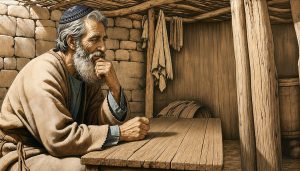
The High Holy Day season about to be upon us is all about our inner lives. It is a time carved out on the calendar for us to reflect on the state of our souls. Though synagogue services may be recited aloud, much of the preparation is done silently. In this week’s parsha, the power of silence is recognized.
We are told by the Torah this Shabbat that vows made regarding our relationship with G-d are binding, even if not spoken to another human being. For example, if we articulate a charitable promise only to ourselves, we must keep it, even if no one else knows. After all, G-d knows, and the pledge is binding.
Actions may speak louder than words, but nothing speaks louder than our hearts. Over the next several weeks, our overriding mandate is to look inward and speak internally to our own lives, seeking deepened meaning and a more distilled vision of our paths in the world.
Jewish tradition holds that there is meaning in the spaces between the written words of a Torah scroll. It is the same with our lives. There is value in the silences between the words we say to each other. Quiet moments of solitude help construct the resolutions that we then offer to our families and community as we emerge from the Days of Awe, renewed and ready for another year.
Weekly Parenting Message from the Parsha
Actions Have Consequences
This Shabbat’s Torah portion contains the example of the rebellious son. We are asked to imagine a child who never listens to his parents, acting as ill-mannered as possible. His actions have severe consequences for him, but also for those around him, due to the impact of both his conduct and his punishment. What is the antidote to this kind of poor behavior?
Surprisingly, Jewish tradition teaches that Torah study – intellectual development and immersion in the minutiae of the law – is most important. The great Jewish ethicist, Rabbi Mordechai Miller, summed this view up when he wrote, “As long as he [the rebellious son] recalls the Torah he has learnt, and remembers the commands prohibiting murder or robbery, he may have pangs of conscience and think of mending his ways.” When the child forgets their learning, they forget their morality.
We live in impatient times, clinging to our devices. But, think of sitting at the kitchen table engaging with your child in a close reading and telling of a series of verses that reveal a story. Think of the patient and reasoned discussion one can have with one’s child, offering a myriad of potential ethical possibilities leaping off the page.
Learning centers our daughters and sons. Rather than just offering rules, the act of interpretation and critical thinking involved in reading and examining text grounds our children in the richness of the human condition, and the need for us to think through each situation we encounter in moral terms. Learning Torah is not just a sweet custom. It is essential to the formation of our children’s souls.