By Rabbi Abraham Unger, Ph.D.
Executive Director
This Week’s Torah Portion
On Jewish Identity
Since the advent of modernity in the late 18th century, a looming question has surrounded Jewish identity. What exactly are the Jews? Are we a diasporic people, a faith community, or a religio-ethnic community? The answer is, all of the above, and that response conflicts directly with the modern, post-enlightenment approach to identity.
Jews come from antiquity. We are in fact the only surviving cohesive group from the ancient world of Mesopotamia, Greece, and Rome. In that era, identity was a mixture of ingredients that we moderns have separated out into distinct parts. A scholarly study of identity in antiquity noted that people’s sense of collective belonging before the Common Era consisted of “social, economic, and political landscapes.” This is different from identity today. Today, our citizenship is separate from our ethnic group, and religion is altogether a private individual matter. The Greeks of Alexander’s time would not have understood this. One’s identity was whole, combining what we now think of as nationhood with a religious tradition and ethnic affiliation. That too is the holistic nature of Jewish identity.
In this Shabbat’s parsha, we are commanded in Mitzvot that pertain specifically to the Land of Israel. Rashi emphasizes that certain laws, especially agricultural ones, applied only when the Children of Israel regained sovereignty in Canaan. Our faith is tied to a land, and the land itself fulfills our faith as well.
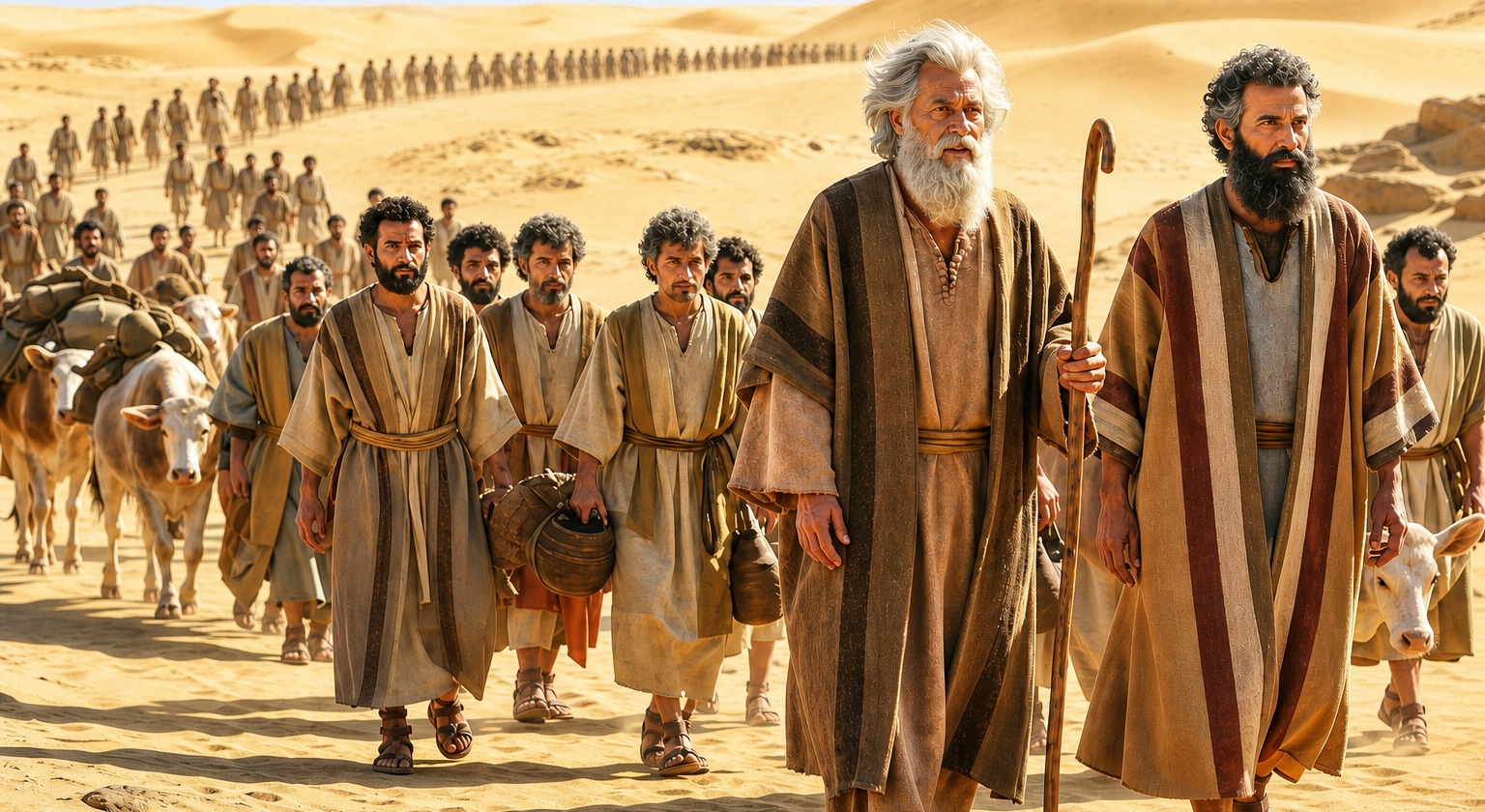
We are living in a time when many are trying to make Judaism into a religion in the modern, Western sense, but it simply is not that. It is a full identity, stemming from antiquity. The hills and sands of Israel were the source of our peoplehood, well before a series of lost empires tried to tear us from our roots in that land. This is the message Moshe Rabbeinu (Moses our Rabbi) reminds us of in this week’s parsha as he gives his final sermon. We must remember today that being a Jew is more than a faith commitment. It is an identity that fully embraces our peoplehood as well.
Weekly Parenting Message from the Parsha
A Life of Service
The polarization we are all living through is more searing each day. The Jewish community is not immune to divisiveness at large. Our communal life often reflects our broader civic lives. But the Torah recognizes no partisanship apart from good and evil. Yes, moral judgments can be made. As Aristotle wrote, there is a point at which proving something down to every single causal factor results in “infinite regress.” There is enough humanity in each of us to intuit right from wrong on the most basic level. How then do we instill that moral compass in our children? How do we inculcate an ethical sensitivity that allows them to navigate the world with integrity, and to recognize when something just isn’t right?
The Sefer HaChinuch, a book written by a father to a son eliciting the root ideas behind each Torah portion’s Mitzvot, constantly repeats that the purpose of the Mitzvot is to condition our behavior. A life socialized to follow a moral code will hopefully be moral. A feeling of commandedness reflects “Gadlut Ha’Adam,” the greatness of the human being promulgated by the 20th century Rabbinic ethicist known as the “Alter of Slobodka,” the leader of a famed pre-war Lithuanian yeshiva.
This week’s parsha suggests another mode of behavioral training to infuse a foundational decency into our children’s souls. The Mitzvah of the Bikkurim, the offering of the first fruits of the spring and summer harvest, is described. Its purpose is to teach gratitude. Remember these offerings were made in the context of an agricultural economy. Tithing the first-ripened selection of one’s crop was no easy sacrifice. But, the lesson is clear. Whether it was a good year or a bad year in terms of production, we are here to serve. The land is not really ours, and its produce is not really ours. We are stewards of the world in which we live and toil. Taking it one step further, Rabbi Moshe M. Eisemann of the Ner Israel Rabbinical Seminary suggests that we plant for the sake of the offering itself. We don’t build for ourselves, but rather to give back.
As parents we are our children’s primary teachers according to Jewish law. If we model lives of service, our sons and daughters will imbibe that way of being. Imagine a world of people raised to feel gratitude, and to give. That kind of culture moves us past today’s temporal divisions and closer to a world where we all see what is right, and doggedly pursue it with a shared drive to serve.